Many peoples, many styles
China officially recognises 56 ethnic groups. The largest, the Han, make up the great majority of the population, and many of the others have their own distinct dress. In some rural areas it is still worn every day, elsewhere mainly for festivals and family events. A few examples:
- Tibetans wear the chuba, a long, wide-sleeved robe belted at the waist, often lined with sheepskin in the highlands.
- Mongols wear the deel, a long robe fastened at the side and suited to riding and a cold climate.
- Miao women are known for detailed embroidery and, in some communities, large silver headdresses and jewellery worn at festivals.
- Uyghur men and women often wear the doppa, an embroidered cap.
Dress also differs from region to region within the same group, so these are only broad outlines.
Women’s traditional clothing
Looking for men’s traditional clothing? Jump directly to Men’s traditional clothing ↓.
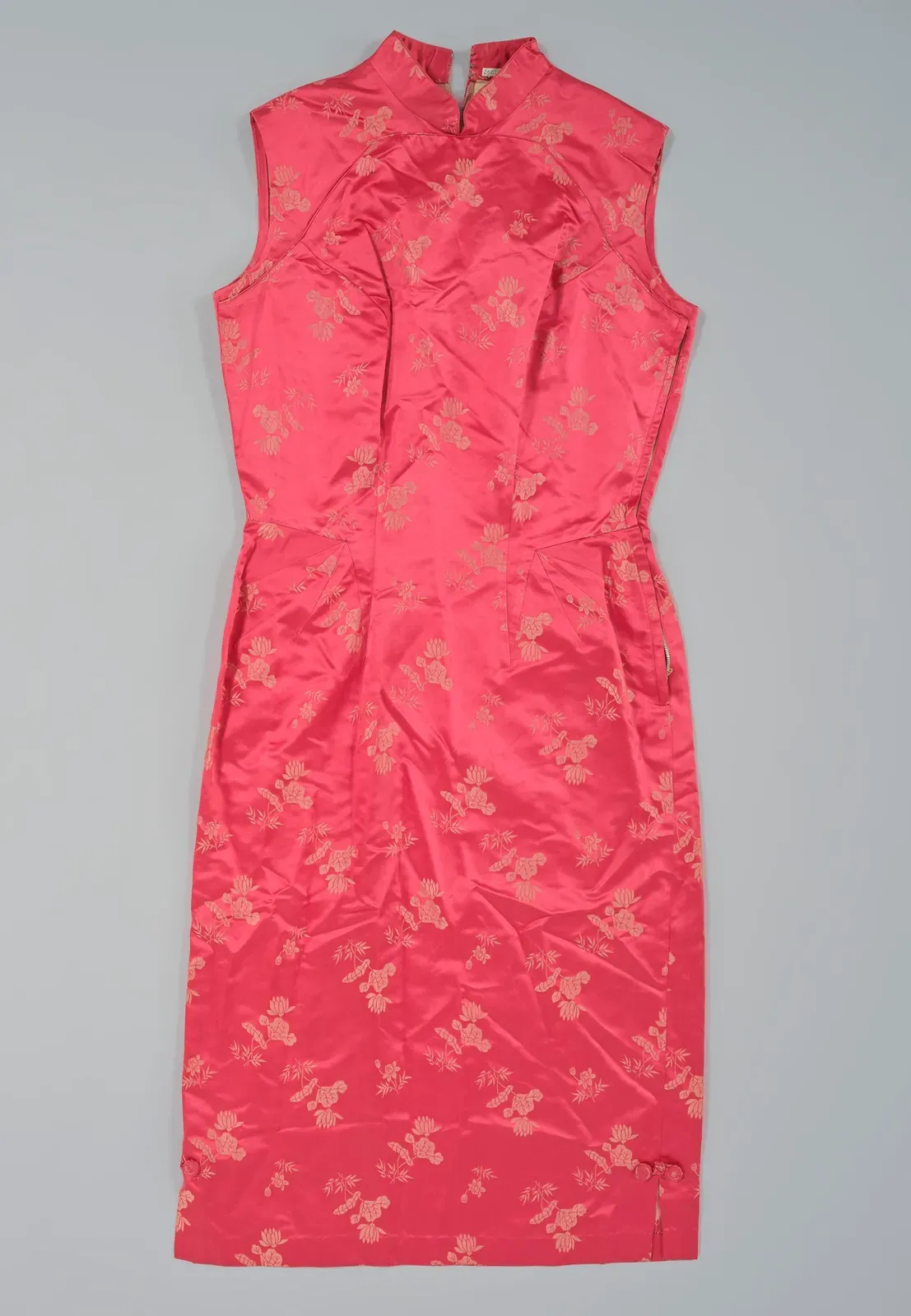
- Qipao (Cheongsam): a fitted dress that developed in 1920s Shanghai, with a high mandarin collar, an asymmetrical front closure fastened with knotted frog buttons (pankou), a close-fitting waist and side slits. It is made in silk, brocade or printed fabrics. Read more on our qipao page.
- Ruqun: the classic Hanfu ensemble for women, consisting of a short crossover blouse (ru) and a long, sweeping pleated skirt (qun) tied high at the waist or chest with silk ribbons, popular in the Tang and Song dynasties.
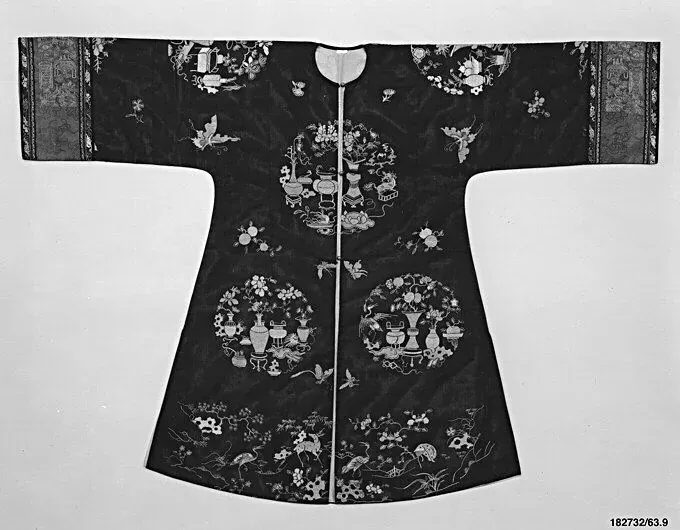
- Qing dynasty jackets and robes: loose silk jackets and robes with embroidery and wide decorative sleeve bands (shuixiu), as seen in historical court and family dress.
- Qun Kwa (Qungua): the two-piece bridal outfit of southern China, a red jacket and skirt embroidered with dragons and phoenixes in gold and silver thread.
- Miao silver dress: women of the Miao ethnic group wear ceremonial dress with fine embroidery and large silver headdresses and jewellery at festivals.
Men’s traditional clothing
Looking for women’s traditional clothing? Jump to Women’s traditional clothing ↑.
- Changshan: a men’s long gown with a mandarin collar, side buttoning and side slits, which served as standard formal wear from the late Qing dynasty into the twentieth century.
- Tang suit (Tangzhuang): a jacket with a standing collar and knotted frog buttons, based on the Qing-era riding jacket (magua). It is often worn at New Year, weddings and family events.
- Shenyi and Paofu: Hanfu robes worn by scholars and officials, with wide sleeves, crossed lapels (closing left over right) and sash belts.
- Ethnic garments: Tibetan men wear the chuba, often lined with sheepskin. Mongolian men wear the deel, a side-buttoned coat. Uyghur men wear embroidered doppa caps.
Wedding attire
Red is the traditional colour of weddings in China, standing for joy and good fortune. In the past a bride often wore red and covered her head with a red veil, which the groom lifted after the ceremony. In late imperial times, brides from well-off families might wear a phoenix crown (fengguan) and an embroidered cape (xiapei).
Today many couples in southern China, Hong Kong and overseas Chinese communities choose a qun kwa (Mandarin qungua) for the bride: a two-piece jacket and skirt in red, embroidered with dragons and phoenixes in gold and silver thread. A similar embroidered outfit is often called xiuhe. Many brides wear a white Western gown for part of the day and change into a qun kwa, a red qipao or a hanfu-style dress for the tea ceremony, in which the couple serve tea to their elders, or for the banquet. Grooms often wear a suit, a Chinese-style jacket or a long gown.
Festivals and celebrations
- Lunar New Year (Spring Festival), in January or February, is the most important holiday. Many people buy new clothes for it, and red clothing and accessories are popular for good luck. Some people wear red during their own zodiac year (benmingnian), which is traditionally considered a year of bad luck.
- Traditional festivals such as the Lantern Festival and Mid-Autumn Festival have become popular days for hanfu enthusiasts to dress up.
- Many ethnic groups wear their finest dress for their own festivals and New Year celebrations.
Traditional clothing today
Most people in China wear Western-style clothing day to day. Traditional elements still appear in many places. The Tang suit (tangzhuang), a jacket with a standing collar and knotted “frog” buttons, is often worn at New Year and family events. Despite its name, it is based largely on the magua, a short jacket of the Qing period. Qipao-style uniforms are used in some hotels and restaurants, and the qipao remains a common choice for formal events in China and abroad.