Women’s traditional clothing
Looking for men’s traditional clothing? Jump directly to Men’s traditional clothing ↓.
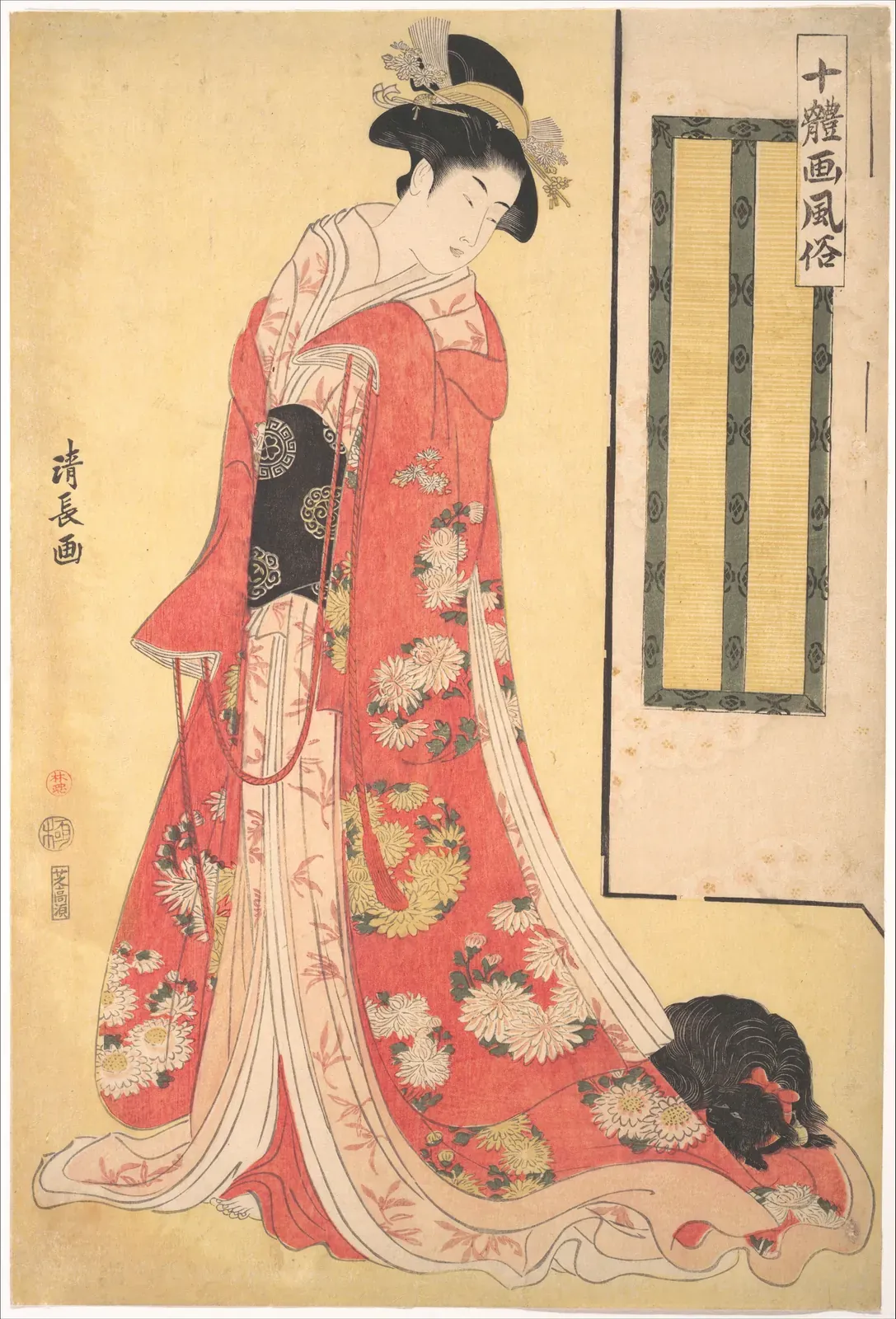
Women’s traditional clothing in Japan centres on the kimono, a T-shaped robe sewn from straight panels of silk or cotton, tied at the waist with an obi sash. The type of kimono a woman wears depends on her age, marital status and the occasion:
- Furisode: the most formal kimono for unmarried young women, with long, swinging sleeves (often 100 to 110 cm) and bold all-over patterns. It is worn for Coming of Age Day (Seijin no Hi), graduation ceremonies and weddings.
- Kuro-tomesode: a black silk kimono with five family crests (kamon) and patterns only below the waist. It is the most formal kimono for married women and is typically worn by mothers at weddings.
- Houmongi and Tsukesage: semi-formal visiting wear with patterns that flow across the seams, worn for tea ceremonies, receptions and parties.
- Yukata: an unlined cotton kimono worn casually in summer for festivals and hot-spring outings.
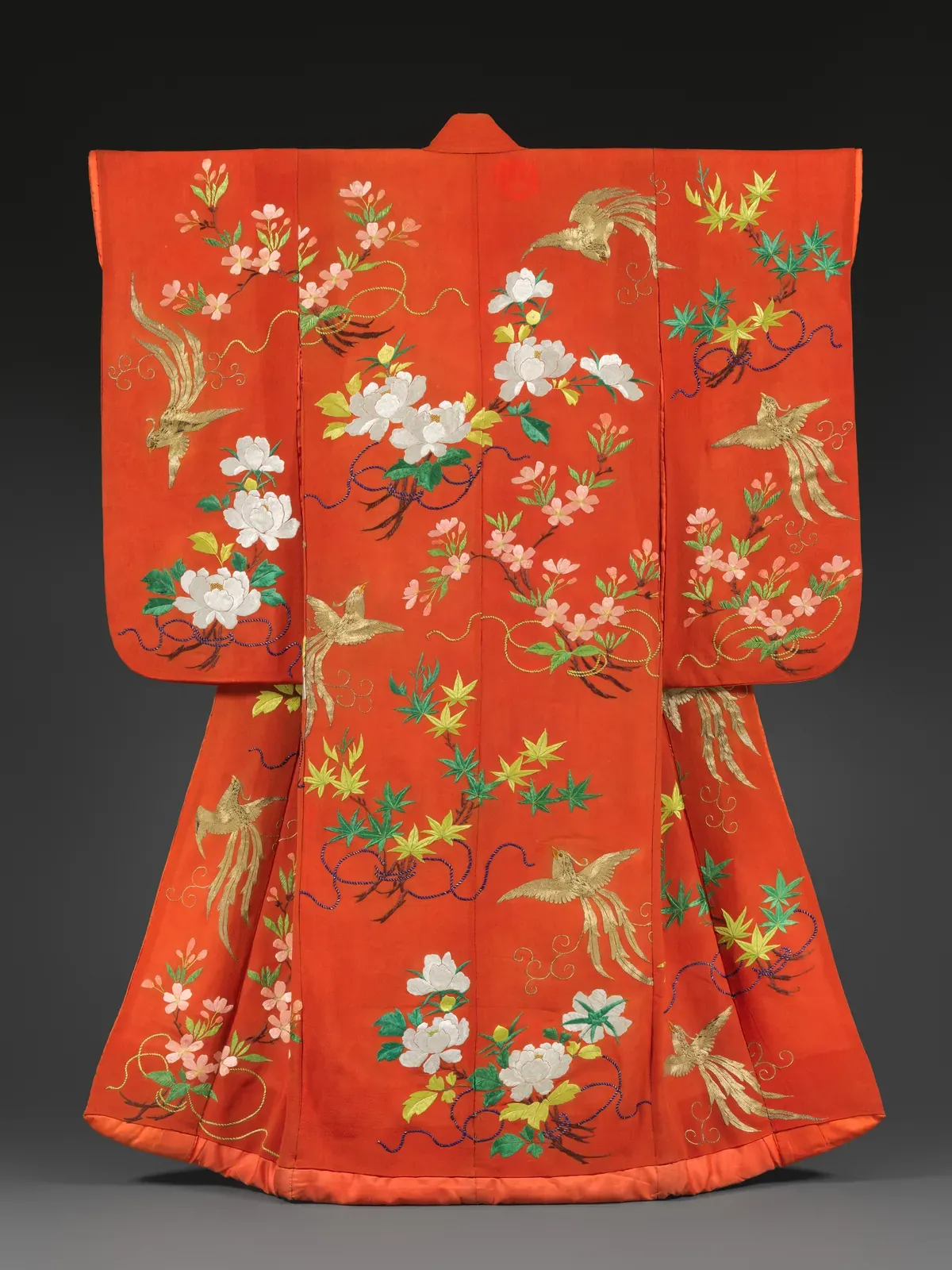
- Bridal wear: brides wear the white Shiromuku ensemble, often with a white hood (wataboshi), and may later change into the Irouchikake, a coloured outer coat embroidered with cranes, pine and gold foil.
- Read more about patterns and care on our kimono page.
Men’s traditional clothing
Looking for women’s traditional clothing? Jump to Women’s traditional clothing ↑.
Men’s kimono are usually darker and simpler than women’s:
- Men’s Kimono: cut in navy, charcoal, indigo, dark green or brown, with shorter sleeves. It is secured by a narrow sash (kaku-obi, about 10 cm wide) tied low around the hips.
- Hakama: wide, pleated trousers worn over the kimono. The seven pleats are said to stand for seven virtues: benevolence, justice, politeness, wisdom, sincerity, loyalty and dignity.
- Haori: a hip-length jacket worn open over the kimono and hakama, fastened across the chest with braided silk cords (haori himo).
- Montsuki hakama: the most formal men’s outfit, consisting of a black silk kimono and matching haori with five white family crests (kamon), worn with striped grey-and-black hakama. It is worn by grooms, at graduation ceremonies and by tea and martial arts masters.
Wedding attire
At a traditional Shinto wedding, the bride usually wears a shiromuku, an all-white kimono ensemble. White stands for purity and a new beginning. She may cover her hair with a white hood (wataboshi) or a headdress called a tsunokakushi. Many brides later change into an iro-uchikake, a richly coloured and embroidered over-robe, for the reception.
The groom traditionally wears a black montsuki kimono marked with his family crest, together with a haori jacket and striped hakama. Many Japanese couples today hold a Western-style or mixed ceremony, but the shiromuku remains a popular choice for the shrine ceremony itself.
Festivals and celebrations
Several yearly events are closely tied to traditional dress:
- Coming of Age Day (Seijin no Hi), on the second Monday of January, celebrates young adults. Many young women wear a furisode, a kimono with long, swinging sleeves.
- Shichi-Go-San (“seven-five-three”), around 15 November, marks the growth of children aged three, five and seven. Children are often dressed in kimono for a visit to a shrine.
- Summer festivals and fireworks displays are the season of the yukata, a light, unlined cotton kimono that is easy to put on and comfortable in the heat.
- New Year shrine visits are another popular occasion for wearing kimono.
Kimono etiquette
The most important rule is that the left side of the kimono is wrapped over the right, for both women and men. Wrapping right over left is reserved for dressing the deceased at funerals.
Kimono also follow levels of formality, set by the type of kimono, where its patterns are placed and how many family crests (kamon) it carries, from one to five. A black kimono with five crests and patterns only below the waist (kuro-tomesode) is the most formal kimono for married women, while the furisode is the most formal for unmarried women. A kimono covered in a small repeating pattern (komon) is suitable for casual outings.
Traditional clothing today
Kimono are expensive and take practice to put on, so many people rent them for special days or ask a professional dresser (kitsuke specialist) for help. Kimono rental shops are common in historic districts such as those in Kyoto. The yukata is still widely worn every summer, and many traditional inns (ryokan) provide one to guests.