Women’s traditional clothing
Looking for men’s traditional clothing? Jump directly to Men’s traditional clothing ↓.
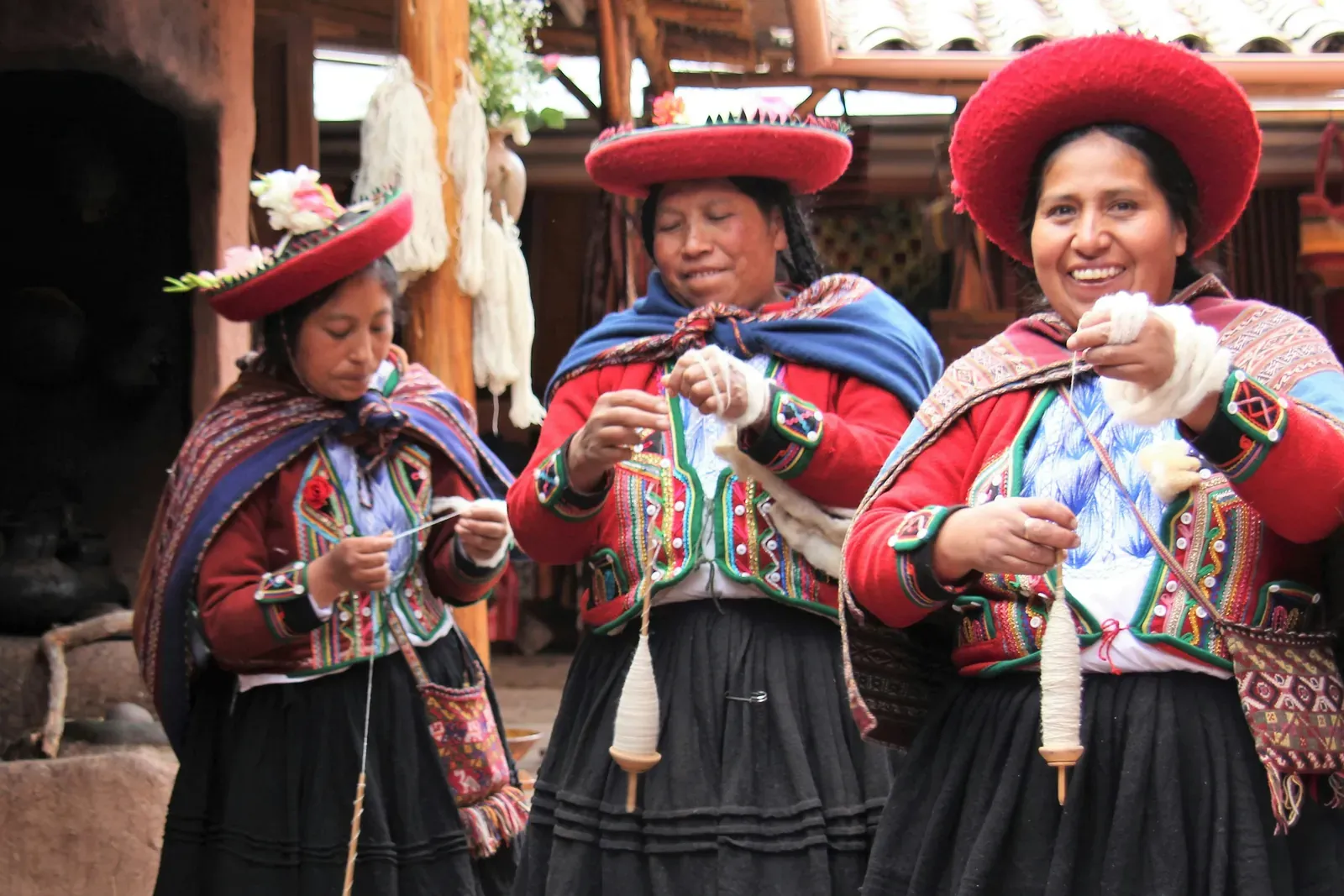
- Pollera: a wide, gathered woollen skirt worn by Quechua and Aymara women in the Andean highlands. Women often wear three to six polleras layered over one another, which keeps out the cold and creates a wide, bell-like shape. The hems are decorated with woven bands and embroidery (ribetes) that show the wearer’s home village.
- Lliclla: a heavy, rectangular handwoven shoulder cloth pinned across the chest with a silver or bronze pin (tupu). It doubles as a sling for carrying babies or goods.
- Montera: regional hats made of felt or stiffened fabric, decorated with ribbons and beads. The shape varies widely, from flat discs in Cusco to tall straw hats in Cajamarca, and shows where the wearer is from.
- Chaquetilla: a fitted woollen jacket worn over the blouse, embroidered with floral motifs.
Men’s traditional clothing
Looking for women’s traditional clothing? Jump to Women’s traditional clothing ↑.
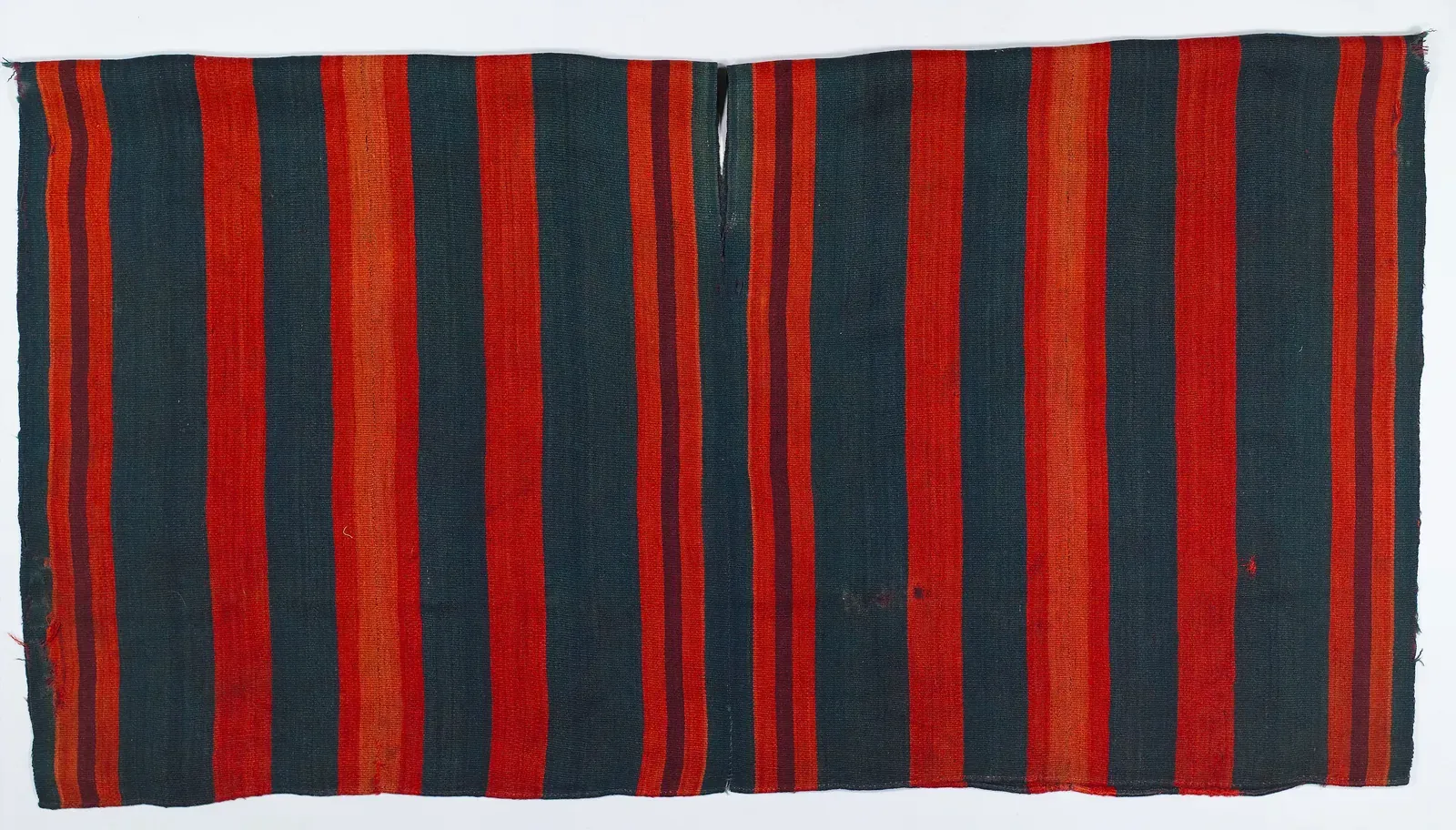
- Poncho: the main outer garment for men in the Andes, handwoven from alpaca, llama or sheep’s wool. It is made of two panels joined in the centre with a slit for the head, open at the sides. Colours and patterns show the wearer’s community. Read more on our poncho page.
- Chullo: a hand-knitted wool cap with ear flaps and braided ties, worn by men and boys. The knitted patterns often show local animals, mountains and other Andean motifs.
- Bayeta trousers and chumpi: men wear durable homespun wool trousers (bayeta), tied at the waist with a handwoven patterned sash (chumpi), and sturdy sandals (ojotas). Historically, Inca men wore the side-sewn knee-length tunic known as the unku.
Weaving traditions
Andean weaving has a history of thousands of years. Before the Spanish conquest, Inca men wore the unku, a knee-length tunic sewn at the sides, and women wore a wrapped dress (aqsu) held with tupu pins. Much of today’s highland dress combines these Andean roots with elements introduced during the colonial period, such as sheep’s wool and certain cuts of skirt and jacket.
Weaving is still practised in many communities, especially in the Cusco region and around Lake Titicaca. Women often spin with a drop spindle while walking or talking, and many weave on a backstrap loom. Natural dyes remain in use, among them red from the cochineal insect. On Taquile Island in Lake Titicaca, textiles are made by both women and men, and knitting is traditionally a men’s task. “Taquile and its textile art” is inscribed on UNESCO’s list of Intangible Cultural Heritage.
Regional variety
- The coast: here dress reflects Spanish, African and Indigenous influences. The marinera, often called Peru’s national dance, is performed in couples with a handkerchief. In the northern style, women usually dance barefoot in full skirts and lace or embroidered blouses, while men wear a straw hat and a light poncho or jacket.
- The Amazon: the Amazon region is home to many Indigenous peoples, each with their own clothing traditions. The Asháninka, for example, are known for the cushma, a long cotton tunic, and the Shipibo-Konibo for the geometric designs called kené that appear on their textiles.
Wedding attire
Wedding customs in Peru vary widely between cities and rural areas, and between regions and communities. In many highland villages, the couple and their guests wear their best festive clothing, often newly woven or embroidered for the occasion. A celebration can last more than one day and include music and dancing.
In cities, many couples choose a white wedding dress and a suit, and some add Andean textiles or accessories. Across the country, godparents (padrinos) often play an important role and may help with the costs of the wedding.
Festivals and celebrations
- Inti Raymi, the Inca festival of the sun, is re-enacted every 24 June in Cusco, with performers in costumes inspired by Inca dress.
- The Virgen de la Candelaria festival in Puno, held in February, brings together thousands of dancers and musicians. Its costumes range from embroidered, masked outfits to local community dress. The festival is also inscribed by UNESCO as Intangible Cultural Heritage.
- Many towns hold patron saint festivals, where people wear festive dress and dance groups perform in matching costumes.
Traditional clothing today
In many highland communities, especially among women, traditional dress is still worn every day, while others keep it for festivals and community events. In the cities most people wear Western clothing. Weaving cooperatives and centres, particularly in the Cusco region, work to keep techniques and local designs alive and sell textiles directly. If you want to photograph people in traditional dress, ask first.