History
The agbada belongs to a wider family of large robes worn by men across West Africa, including the Hausa babban riga and the grand boubou of Senegal and neighbouring countries. Such robes are often linked with the spread of Islam and with long-distance trade across the Sahara. The exact origins of the Yoruba agbada are not well documented, so it is best understood as part of this shared regional tradition.
Among the Yoruba, the agbada became the most formal part of men’s dress. A robe this size needs a great deal of cloth, and versions made from handwoven cloth with heavy embroidery were costly, so the agbada has long been associated with status, chiefs and important occasions. Today it is worn by men from many backgrounds across Nigeria.
Parts of the outfit
A full agbada outfit usually has four parts:
- Agbada: the outer robe. It is very wide, open along the sides and long, often reaching below the knees. The neck opening and the front are usually decorated with embroidery, and there is often a pocket on the chest.
- Buba: a loose shirt, usually long-sleeved, worn under the robe.
- Sokoto: trousers, often narrowing towards the ankle and tied at the waist.
- Fila: a cap. Common styles include the gobi, a soft, tall cap that the wearer presses into shape, and the abeti aja, a cap with side flaps said to resemble a dog’s ears. How the cap is tilted is a matter of personal style.
Fabrics and styles
The most prestigious agbada are made from aso oke, cloth handwoven in narrow strips that are sewn together. Classic types of aso oke include etu (dark indigo), sanyan (a beige silk) and alaari (a deep red). Many agbada are also made from damask, brocade, lace or cotton, and embroidery may be done by hand or by machine.
Styles range from heavy, richly embroidered robes for ceremonies to lighter, plainer versions for warm weather. The robe, shirt, trousers and cap are often cut from the same fabric, although some men choose a contrasting cap or shirt.
How it is worn
The buba and sokoto are put on first, and the agbada goes over them. Because the robe is so wide, the wearer gathers the fabric on each side and folds it up onto the shoulders to free the arms. Adjusting the folds from time to time is part of wearing an agbada.
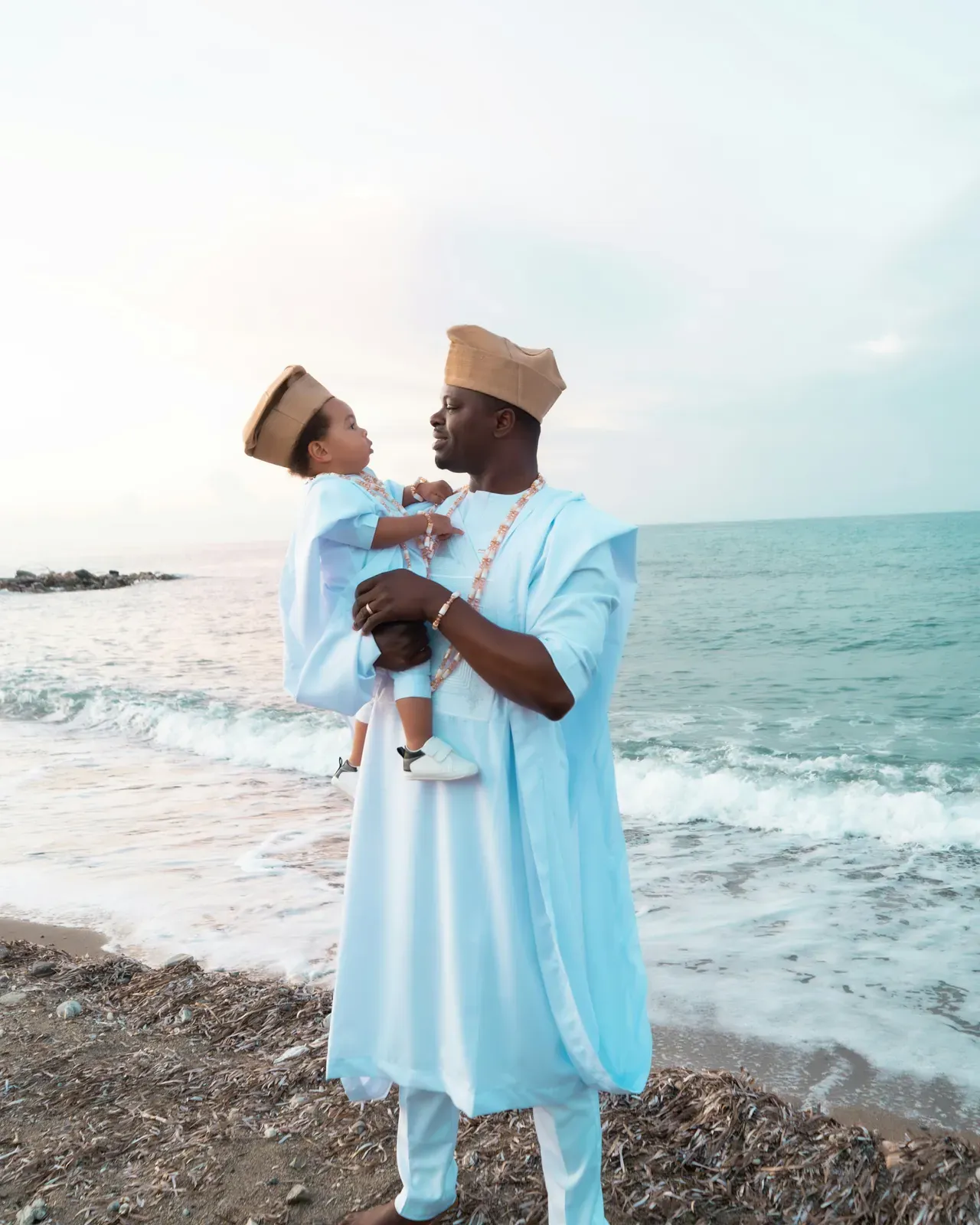
The cap completes the outfit, together with leather slippers or shoes. For important events, men may add bead necklaces, a walking stick or a hand fan, especially chiefs and elders. Families sometimes dress fathers and sons in matching outfits, as in the photo above.
Occasions today
The agbada is mainly worn for special occasions:
- weddings, by the groom, the fathers of the couple and guests
- naming ceremonies and birthdays
- chieftaincy and coronation ceremonies
- funerals and memorial services
- religious festivals and services, such as Eid and Christmas
- political events and formal functions
For everyday wear, many men prefer the buba and sokoto on their own, or a kaftan. At many events, guests wear agbada made from aso ebi, a fabric chosen by the hosts. See traditional clothing in Nigeria for how the agbada fits into traditional weddings.